We Repair Most Brands of Hot Water Pressure Washers
Looking for hot water pressure washer service in Devils Lake, North Dakota? We provide professional diagnostics, maintenance, and repair for commercial and industrial hot water pressure washers throughout Devils Lake, including Rugby, Rolla, New Rockford, Lakota, Harvey, and Cooperstown.
We service diesel-fired hot water pressure washers used for washing trucks, tractors, trailers, agricultural equipment, construction machinery, and fleet vehicles. From burner issues and heating coils to pumps, engines, fuel systems, and electrical components, we are here to help keep your washer running hot, efficient, and dependable when you need it most.
Whether you’re a farm operation, trucking company, municipality, or contractor, we deliver fast, knowledgeable hot water pressure washer repair and service across central and north-central North Dakota—minimizing downtime and keeping your equipment ready to work.
If you are experiencing any of the following problems with your pressure washer we can help you get back up and running:
Low water pressure or fluctuations in pressure
Burner not igniting or not functioning properly
Unusual noises: grinding, knocking, or high-pitch sounds
Inconsistent water temperature
Leaking fittings and pump components
Electric motor problems and faulty control functions
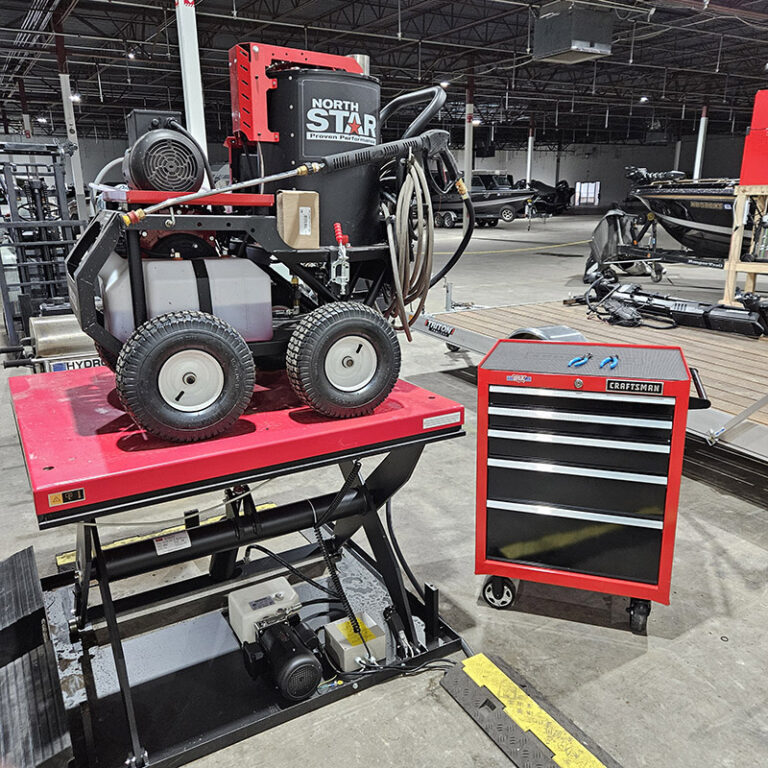
This new NorthStar pressure washer had a faulty flow switch causing issues with automatic start/stop and burner functions.
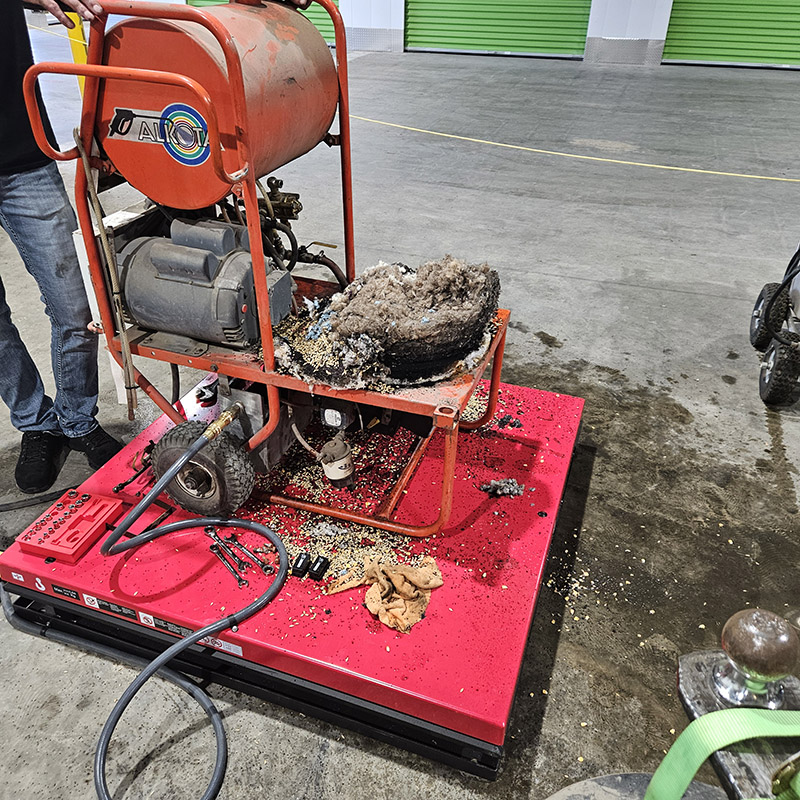
This Alkota sat for several years and the burner wouldn't work. A mouse built a nest inside the heating coil. It was getting fuel but the fuel was getting soaked up by the mouse nest instead of igniting. Removal of the coil and a thorough cleaning and this machine was running good again.
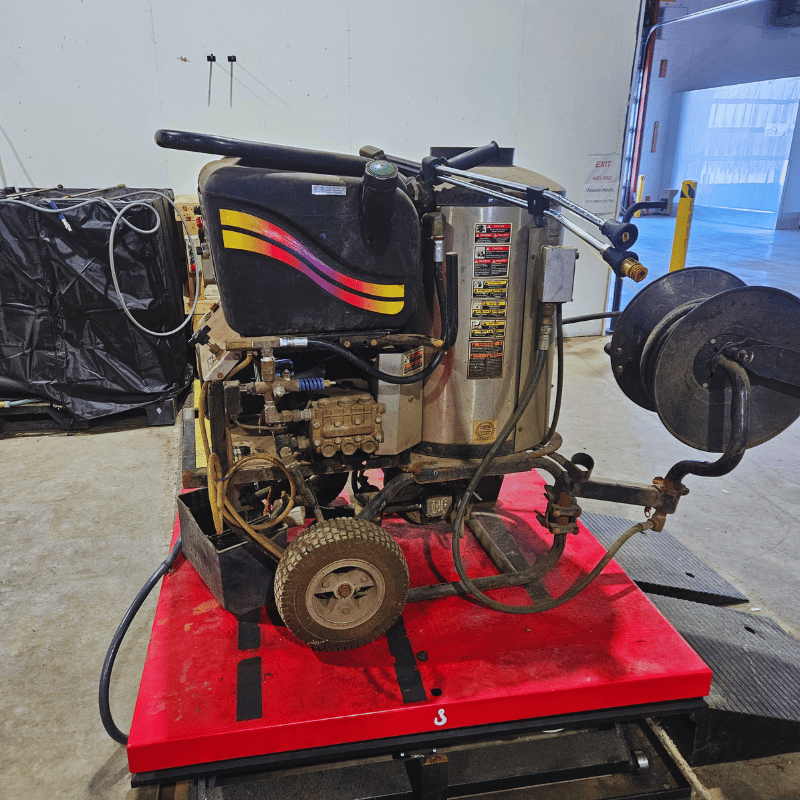
This Aaladin model 14-423 was brought in for service because the burner wasn't working.
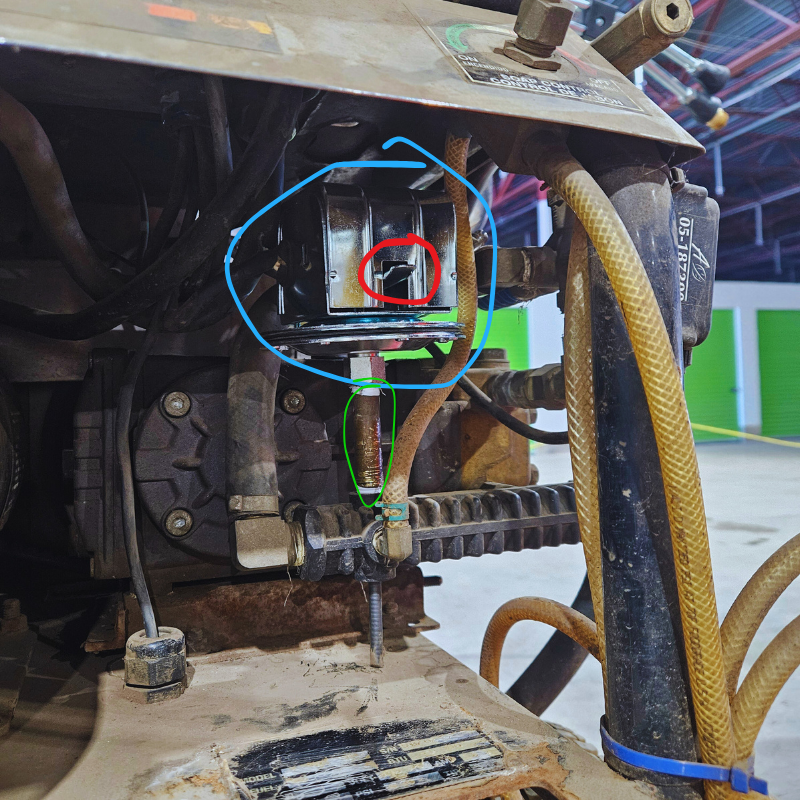
A common problem is the Vac switch no longer working properly (circled in blue). If your burner isn't working, you can test this by pressing the tab down with the burner on (circled in red), if the burner works, replacement of the vac switch and cleaning the fittings (green) will solve your burner problem.
Low pressure can be caused by clogged filters, worn-out pump parts, leaks in the hoses, or a malfunctioning unloader valve. Inspect these components or have a technician assess the issue.
Signs of pump damage include unusual noises, pressure fluctuations, or visible leaks. A thorough inspection by a technician can confirm pump health and identify necessary repairs.
Regularly check and clean filters, inspect hoses and connections for leaks, maintain the engine, and ensure the heating system is functioning correctly. Follow the manufacturer’s maintenance schedule for best results.
It’s recommended to have your pressure washer serviced at least once a year, or more frequently if you use it heavily or notice any performance issues.
While some minor maintenance tasks can be handled by the owner, complex repairs, especially those involving the heating system or pump, should be performed by a qualified technician to ensure safety and proper functionality.
Overheating can be due to insufficient water flow, a blocked cooling system, or issues with the temperature control. Ensuring proper water supply and regular maintenance can help prevent overheating.
Regular maintenance, using quality parts and accessories, and following the manufacturer’s guidelines for operation and care can help improve efficiency and extend the life of your pressure washer.
Strange noises can indicate internal damage or worn parts. Stop using the machine and have it inspected by a technician to identify and address the issue.